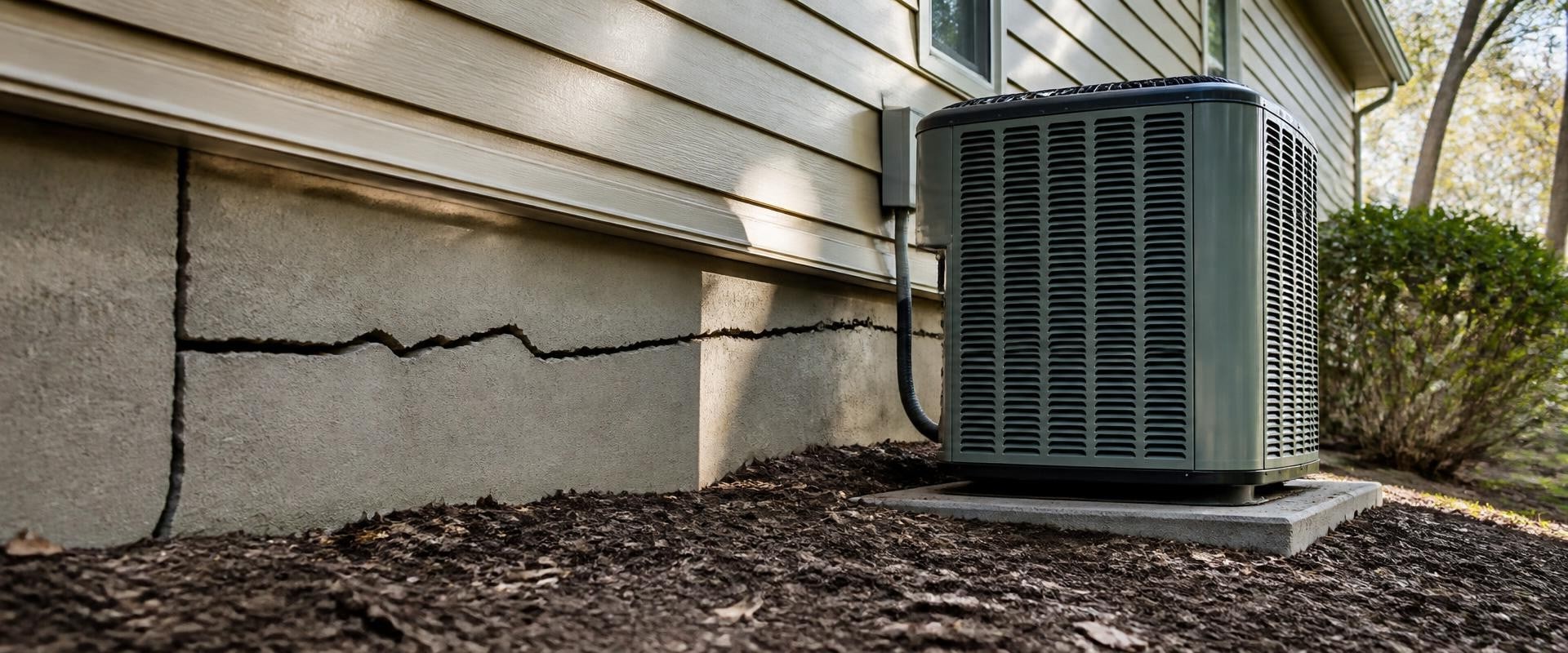
Foundation settlement can affect much more than floors, walls, and doors. Because heating and cooling systems are integrated throughout a building, gradual structural movement may also influence ductwork, equipment placement, refrigerant lines, electrical connections, and drainage components. When different areas of a foundation settle at different rates, the framing above them can shift slightly. Over time, this movement may place stress on HVAC components and contribute to performance problems that are not always immediately recognized as structural in origin.
Ductwork Can Shift and Develop Leaks
Ducts often run through attics, crawl spaces, walls, and floor systems where they are connected to framing or supported by structural components. As a building settles, these areas may move enough to pull duct joints apart or cause flexible ductwork to sag. Small gaps can allow conditioned air to escape before reaching the intended rooms, reducing system efficiency and contributing to uneven temperatures. If duct problems occur alongside signs such as sloping floors or recurring wall cracks, professionals such as Bats Foundation Repair may evaluate whether foundation settlement is contributing to broader changes throughout the structure.
Heating and Cooling Equipment May Lose Level Alignment
Furnaces, air handlers, heat pumps, and other HVAC equipment generally perform best when installed on stable, level surfaces. Settlement can cause floors, slabs, or equipment platforms to tilt gradually. Uneven equipment may experience increased vibration, unusual noise, or drainage difficulties. Outdoor condenser units can also shift when the soil or pad beneath them settles. Although equipment can sometimes be leveled independently, continued structural movement may cause alignment problems to return unless the underlying condition is addressed.
Refrigerant Lines May Experience Added Stress
Air conditioning and heat pump systems rely on refrigerant lines connecting indoor and outdoor components. These lines often pass through walls, floors, or foundation openings. When portions of a building move differently, tubing can experience tension at bends, joints, or connection points. Over time, repeated stress may increase the possibility of damage or leaks. HVAC technicians can inspect these connections when structural movement is known or suspected.
Condensate Drainage Can Change
Air conditioning systems remove moisture from indoor air, producing condensation that must drain away properly. Drain pipes typically depend on a consistent slope for effective water flow. Foundation settlement may alter that slope, creating low areas where water collects or drains slowly. This can contribute to overflowing drain pans, water damage, or unwanted moisture around the HVAC equipment. Correcting the structural condition and then checking drain alignment can help restore proper flow.
Airflow Problems May Appear Gradually
Structural changes can also influence vents, registers, and return-air pathways. A shifting wall or floor may create gaps around duct openings, while damaged connections can reduce airflow to certain rooms. Homeowners might notice that previously comfortable spaces become harder to heat or cool even though the HVAC equipment itself appears to be operating normally. These gradual changes can sometimes be mistaken for equipment aging alone.
Repeated HVAC Repairs May Require a Broader Evaluation
If duct connections, drainage lines, or equipment alignment repeatedly need repair, examining structural conditions may provide additional insight. Fixing mechanical symptoms without addressing ongoing foundation settlement can allow the same problems to return.
Coordinate Structural and HVAC Repairs
Long-term results are often improved when foundation and HVAC professionals coordinate their work. Structural stabilization may be completed first, followed by inspection of ducts, refrigerant lines, drains, electrical connections, and equipment alignment. By addressing both the underlying movement and the affected mechanical components, homeowners can reduce recurring problems and create better conditions for efficient, dependable heating and cooling performance over time.